

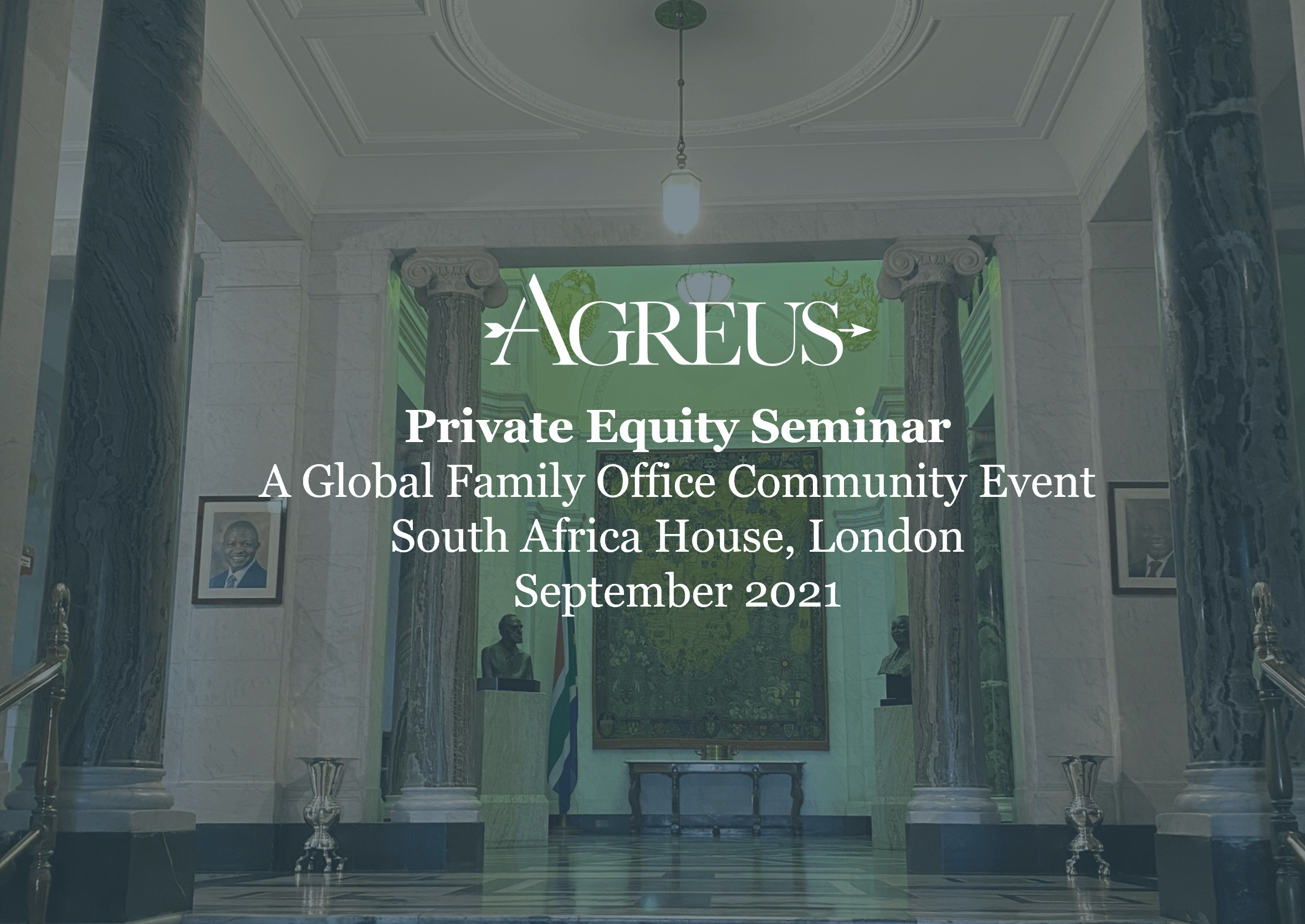
Family Office Leaders from across the world congregated at South Africa House in London yesterday to discuss all-things Private Equity, long-term wealth preservation and individuality.
The executive breakfast event was opened by South Africa’s High Commissioner in the UK, Her Excellency Nomatemba Tambo, daughter of apartheid struggle hero and former President of the African National Congress (ANC) Oliver Reginald Tambo and heroine Adelaide Tambo. H.E Tambo spoke optimistically about the Sub-Saharan economy by professing “South Africa is open for business”, telling the audience that the South African economy is growing year on year and opening its doors to Family Offices as the gateway to African trade.
The undertones of South Africa continued throughout the event as a rugby sporting legend turned Merchant Bank Founder offered his journey from the Springboks pitch to the Sub-Saharan Boardroom and explained why rugby taught him everything he needed to know about business and more.
The event was also ended by a feast of South African delicacies and wine where the audience could network with the esteemed panel of speakers including Agreus Co-Founder Paul Westall who gave his reasons as to why almost two-thirds of Family Offices have expanded into Private Equity, how to get involved in the action and of course, how to find the right talent to make it happen.
The event held under Chatham House Rule offered advice, shared experiences and tangible next steps of how to navigate Private Equity investments all while educating the audience on South African culture and answering questions such as how to pick the right investment, how to measure performance and how to cut through the sales pitch.
Here we offer our key findings from the day for those of you who missed it.
- Private Equity, in numbers.
Agreus Co-Founder Paul reported a surge in activity within Private Equity investments over the last 12 months with a record-breaking 63% of Family Offices further diversifying into the asset class, 28% of Family Offices hiring new talent to meet the demand and more than 1300 small and medium enterprises being backed by ambitious investors from across the community. While contributing to extraordinary returns for Family Offices, Paul described the challenges further diversification into Private Equity can bring.
He said: “Private Equity isn’t new. It has always been part of the wealth preservation strategies implemented by Family Offices but what has increased is allocation and as it has, so has the demand for relevant and exceptional professionals. This in itself has provided a sizeable challenge for Family Offices and the biggest is knowing how to compensate them. Professionals joining Family Offices from Private Equity firms are accustomed to structure, long-term career progression and regular compensation reviews. They want glamourous incentive plans such as carried interest which is both a rarity in Family Offices and often incomparable to the discretionary bonuses received by the majority of Family Office Investment Professionals. This can lead to disputes as well as a lack of alignment and so hiring the right talent and benchmarking their compensation from the very beginning can measure expectations and reduce risk of exposure in your resources later on down the line.”
- Taking a LONG-term view.
The second panellist opened his segment of the panel with one very simple tip. Have a long-term view of your investments.
While Family Offices often discuss their long-term wealth planning goals, rarely do Families or any organisations for that matter, look as far into the future as this speaker who in 2003 decided to plant a flag in the year 2050 and work backwards. With 29 years left to go, he shared his forecasts for the future and how they impact his everyday investment decisions, particularly within the realm of Private Equity.
The first find was demographics, looking at migration and population trends. Through doing so, he and his team discovered that the population would stop at 11.5BN and that by 2050, we will, as a global population, experience a shortage of children and young people. This suggests that the burden on workers will be monumental and diseases such as Dementia could have a tremendously negative impact on the aging population leaving them partially incapacitated. Focusing today on genomics and sequencing, the speaker invests into health technology and science to find preventative measures for the illnesses of the future that will consequentially impact the economy. He repeats the process with the likes of technology, climate and education – focusing on educating tomorrow’s aging and controlling generation.
The impressive speaker ended his part in the panel by stating that long-term, endowment-like thinking is the key to success and took the same view when discussing impact and philanthropy. In his words: “Doing impact on the side of your investment portfolio is like doing bad things all week and going to church on Sundays.”
- Connecting the dots.
While the second speaker made time travelling look easy, the third opened with a question – how do you connect the dots? How to you take all of the trends and concerns of the future and translate them into investments today? It can be both confusing and difficult he said, as humans, we default back to what we know and love which is both a blessing and a curse.
The third speaker of the day discussed his Private Equity allocation and spoke of the two rules he lives by. The first is to stick to business-to-business opportunities which while not applicable to everyone, alleviates the need for research around consumer trends and grants the ability to work with some truly exciting businesses on both the buy and sell side. The second rule is to look beyond the brand and look to the individual. He stressed the importance of picking a team not a Private Equity House or Fund and said this guarantees a breadth and depth of capability and helps him to ‘connect the dots’.
He used the example of his recent investment in an LED lighting company. He confessed to not having an understanding of the sector as such but claimed it didn’t matter as the organisation had a fantastic management team, he worked extremely well with the Private Equity House that presented the opportunity and, in his words, it does not take a genius to open the newspaper and predict that halogen bulbs will be replaced by LEDs in no time at all. It is not always about understanding the idiosyncrasies of every sector but having faith, investing in people and performing operational due diligence both holistically and also on a psychometric and personality level within the management teams within each business.
- Family over finances.
A question asked by a Family Office guest was “how do you gain access to mid-level funds?” which was met simply with “access is all about relationships.”
In the experience of one of the panellists, funds always have time for families. They come above and beyond financial ticket prices as these organisations appreciate families, their children and grandchildren and the ideas that they bring with them that institutions cannot. His advice? Pick up the phone, visit in person with your extended family and show them your culture and values. It will grant access to funds that finances alone cannot buy and in the process will align your interests for the long-term.
- Simple is strong.
In the words of the South African rugby champion who joined us, simple is strong. In his new venture of establishing a merchant bank he said, “I do not cover every sector but I have a few select specialists and that in itself offers credibility.” Despite qualifying as a Chartered Accountant with PwC in the same year he signed his first professional contract in rugby, his journey to the banking world was slow and steady. He spoke of wanting to grow his business slowly and organically to ensure it was a success and pleaded with the audience to do things simply and well rather than complicated and lacking in substance. He used the example of opting for an on-shore base for his business and how while initially considering off-shore jurisdictions for taxation benefits, opting to work from London has saved him time, money and hassle while offering him more credibility than he would have received elsewhere.
He also offered some advice, mostly to family members within the audience , which is to go the ‘big school’, work in the ‘big firm’ and compete with the best for a while. This exposure is as invaluable in his eyes as is his time on the pitch which he attributes most of his success to.
He believes everything he knows about business derives from the very principles of rugby that were ingrained in him from a young age. From the strategy and tactics to the basic art of war and battling to keep your team motivated, the same rules apply in both forums and he certainly uses them in the Boardroom today. One example cited was the impact that swapping a Captain on the field can be, citing Harlequins change of leadership and translated this into succeeding your leader within a Family Office.
Change is not always a bad thing he said and while you may want a Rottweiler to head up your business, it is important to remember that Rottweilers bite their own people. Your team needs to be humble and hungry as humility, acceptance and love is what keeps a team together. Citing the three letters he sported on his rugby shirt some years ago, ELE – everyone loves everyone and it is the only way to successfully grow a business.